
Email Marketing: The Complete Beginner-to-Pro Guide (2026 Edition)
What Is Email Marketing?
Simple Definition
Let’s keep it real—email marketing is one of the simplest yet most powerful ways to connect with your audience. It’s basically sending emails to people who want to hear from you. That could be to promote products, share updates, or build relationships over time.
But here’s the twist: it’s not just about sending emails. It’s about sending the right message to the right person at the right time. Think of it like having a direct conversation with your audience—but at scale.
Unlike social media where algorithms decide who sees your content, email gives you full control over your audience. You’re not renting space—you own it.
Why Email Marketing Still Matters in 2026
You might wonder—is email marketing still relevant? Absolutely. In fact, it’s stronger than ever.
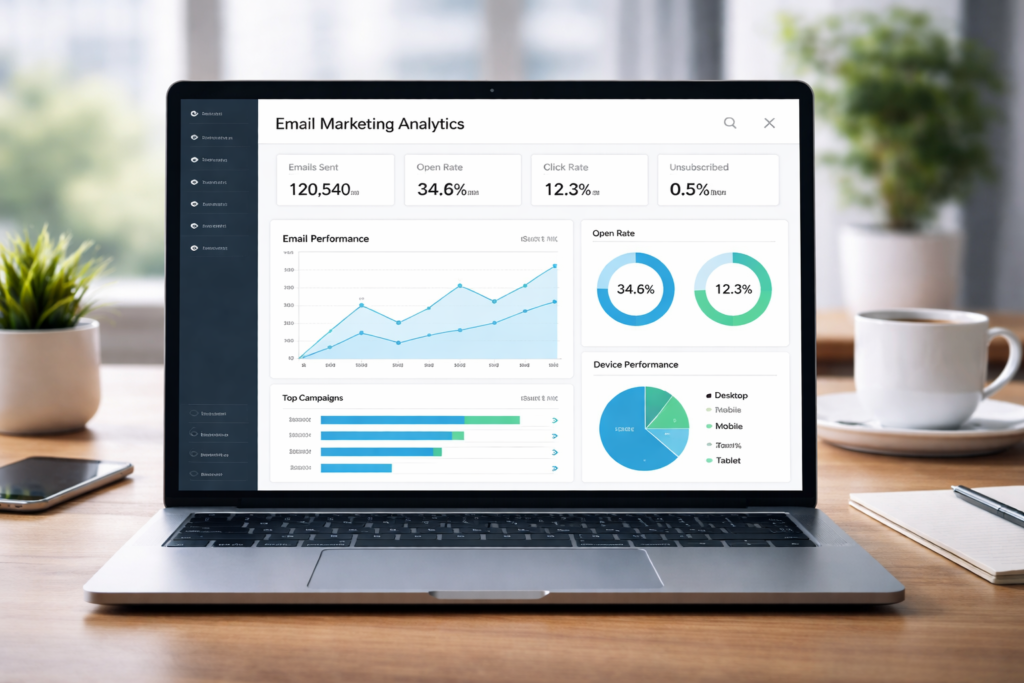
Recent data shows that over 4.48 billion people use email globally, and this number is still growing . That’s more than half the world’s population. Even more interesting? 99% of users check their email daily .
Here’s the kicker—email marketing delivers an average ROI of $36–$42 for every $1 spent . That’s insane compared to most marketing channels.
So no, email marketing isn’t dead. It’s just evolving—and those who adapt are winning big.
Key Email Marketing Statistics You Should Know
ROI & Performance Data
Let’s talk numbers—because numbers don’t lie.
Email marketing consistently outperforms other channels. On average, businesses earn $36 to $40 for every $1 invested . Some industries like retail go even higher, reaching up to $45 ROI per dollar .
Now imagine investing ₹100 and getting ₹3600+ back. That’s why marketers love it.
Another interesting stat—automated emails generate 41% of total revenue while making up only 2% of email volume . That means smart systems beat mass sending every time.
User Behavior Insights
Email behavior is just as fascinating.
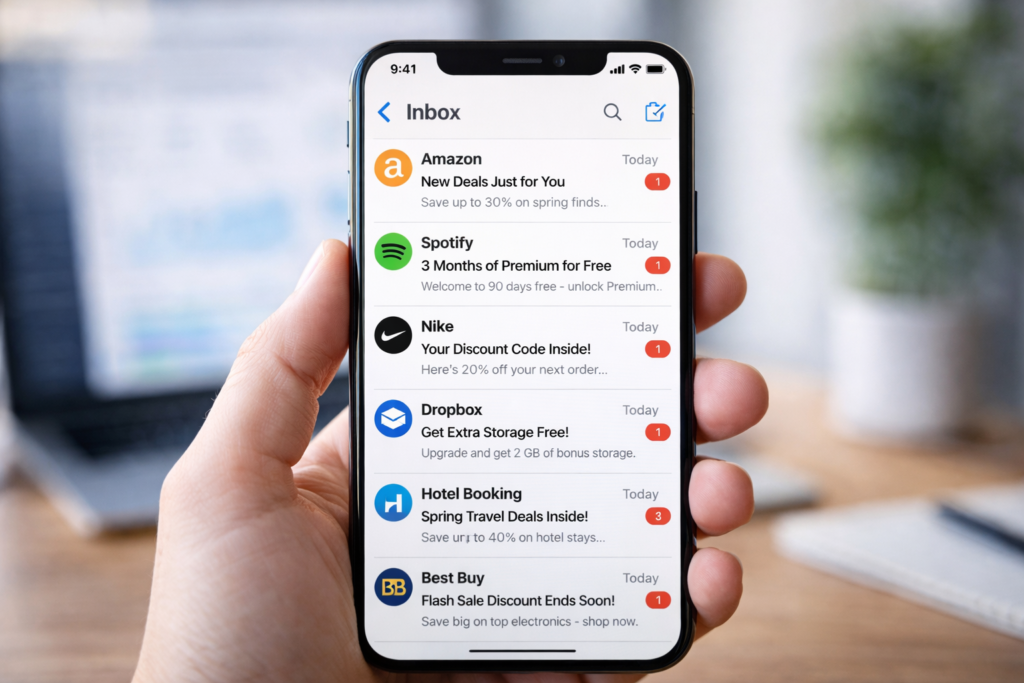
- People receive over 80 emails daily on average
- About 59% of consumers say emails influence their purchases
- Personalized emails significantly improve engagement and clicks
In simple terms, people don’t just read emails—they act on them.
Benefits of Email Marketing
Direct Communication
Think of email as a direct line to your audience. No middleman. No algorithm. Just you and your reader.
When someone subscribes, they’re basically saying, “Hey, I’m interested in what you offer.” That’s powerful. You’re not interrupting—you’re invited.
This creates a deeper connection. Over time, consistent emails build trust, familiarity, and loyalty.
Cost Efficiency
Compared to ads or traditional marketing, email is ridiculously affordable.
You don’t need a huge budget. Whether you’re sending emails to 100 people or 100,000, the cost difference is minimal.
That’s why startups and small businesses love email—it delivers high returns with low investment.
Measurable Results
One of the best parts? You can track everything.
- Open rates
- Click-through rates
- Conversions
This data helps you understand what works and what doesn’t. It’s like having a roadmap for improvement.
Challenges of Email Marketing
Spam & Deliverability
Let’s be honest—not every email lands in the inbox.
Spam filters are smarter than ever. If your emails look suspicious or irrelevant, they might never reach your audience.
That’s why list quality, content relevance, and proper setup matter more than ever.
Competition in Inbox
Here’s the reality: inboxes are crowded.
Your audience is getting dozens of emails daily. Standing out requires creativity, relevance, and timing.
Generic emails? Ignored. Personalized emails? Opened.
Types of Email Marketing Campaigns
Promotional Emails
These are your classic marketing emails—discounts, offers, product launches.
They’re great for driving sales and traffic.
Transactional Emails
These include order confirmations, receipts, or shipping updates.
They might seem boring—but they actually have very high open rates because users expect them.
Newsletter Campaigns
Newsletters keep your audience engaged with updates, tips, or content.
Think of them as relationship builders rather than sales tools.
How Email Marketing Works (Step-by-Step)
Building a List
First rule: never buy email lists.
Instead, grow your list organically using:
- Lead magnets (free guides, discounts)
- Signup forms
- Valuable content
Quality beats quantity every time.
Creating Campaigns
Your email should have:
- A strong subject line
- Clear message
- Engaging content
- A compelling CTA
Keep it simple. People scan emails—they don’t read novels.
Automation & Segmentation
This is where magic happens.
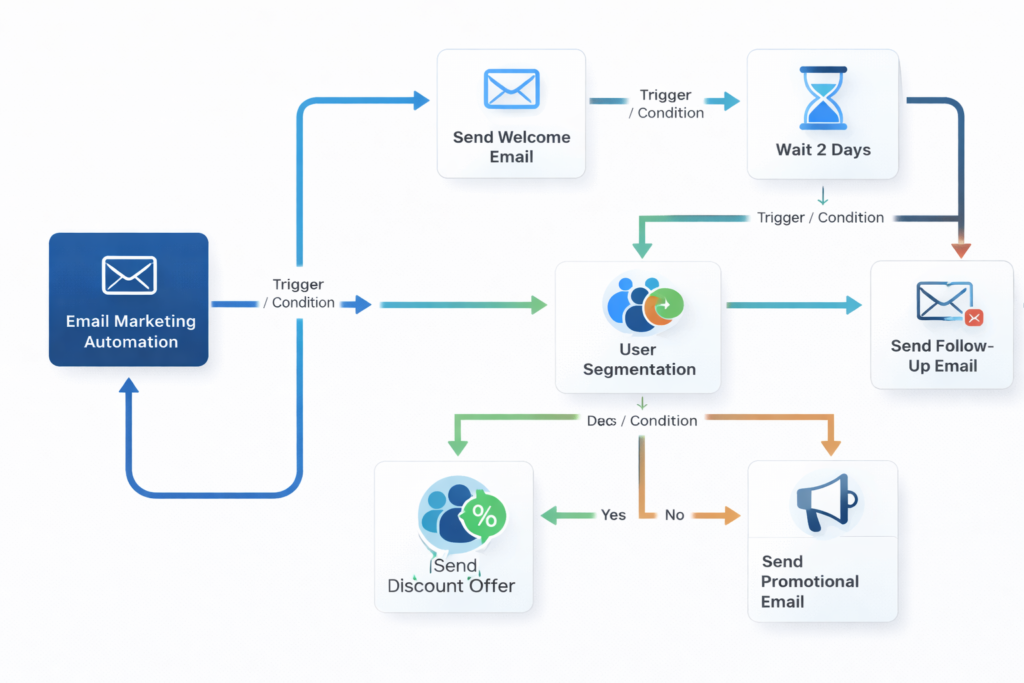
Automation allows you to send emails based on user actions—like signing up or making a purchase.
Segmentation lets you target specific groups, making your emails more relevant and effective.
Best Practices for Email Marketing
Subject Lines
Your subject line decides everything.
Make it:
- Short
- Clear
- Curiosity-driven
- Personalized
Design & CTA
Keep your design clean and mobile-friendly.
Use clear CTAs like:
- “Shop Now”
- “Get Started”
- “Learn More”
Timing & Testing
Timing matters.
Test different days, times, and formats. Use A/B testing to improve performance continuously.

Email Marketing Tools & Platforms
Popular tools include:
- Mailchimp
- HubSpot
- Moosend
- Brevo
These platforms help with automation, analytics, and campaign management.
Future of Email Marketing
AI & Personalization Trends
Email marketing is evolving fast.
AI is now helping marketers:
- Personalize content
- Predict user behavior
- Optimize send times
In fact, 64% of marketers are already using AI for personalization .
The future? More human-like emails powered by smarter technology.
Conclusion
Email marketing isn’t just another digital tactic—it’s a relationship-building powerhouse. While trends come and go, email remains one of the few channels where you truly own your audience.
When done right, it feels less like marketing and more like a conversation. And that’s exactly why it works.
If you focus on value, personalization, and consistency, email marketing can become one of your strongest growth engines.
FAQs
1. Is email marketing still effective in 2026?
Yes, it remains one of the highest ROI marketing channels, delivering up to $36–$42 per dollar spent.
2. How often should I send marketing emails?
It depends on your audience, but consistency matters more than frequency—start with 1–2 emails per week.
3. What is a good email open rate?
Average open rates range between 20%–40%, depending on industry and personalization.
4. Can small businesses benefit from email marketing?
Absolutely. It’s cost-effective and scalable, making it perfect for small businesses.
5. What is the biggest mistake in email marketing?
Sending irrelevant or spammy emails. Always focus on value and personalization.