Marketing

Marketing

Digital Marketing for Beginners

What is Digital Marketing? Simple Definition Digital marketing for beginners is the process of promoting products or services using the internet. Instead of traditional methods like TV ads or newspapers, businesses use websites, social media, search engines, and emails to reach customers. Instead of traditional methods like TV ads or newspapers, businesses use websites, social media, search engines, and emails to reach customers. Think of it like opening a shop, but instead of a physical location, your shop exists online and is accessible 24/7. In today’s world, almost everyone uses a smartphone. People search, shop, and interact online every day. This makes digital marketing one of the most powerful ways to connect with customers. Whether you are a student, business owner, or freelancer, learning digital marketing can open many doors for you. Why It Matters Today Digital marketing is not just important—it is essential. According to recent data, the global digital marketing industry is expected to reach around $786 billion in 2026, showing massive growth. This means more businesses are investing online, and more opportunities are available for beginners. Also, consumer behavior has changed. People trust online reviews, watch videos before buying, and compare products online. In fact, studies show that 72% of Gen Z trust customer reviews more than influencer promotions, highlighting the importance of authenticity. How Digital Marketing for Beginners Works The Basic Process Digital marketing works like a funnel. “If you are starting digital marketing for beginners, consistency and learning basic skills is the key to success.”Then, you engage them. Finally, you convert them into customers. It’s similar to making friends—first, you introduce yourself, then build trust, and eventually create a relationship. Here’s how it typically flows: Awareness → People discover your brand Interest → They explore your content Decision → They compare options Action → They buy or sign up This process helps businesses guide users step by step instead of pushing them directly to buy. Customer Journey Explained Imagine you want to buy shoes. You search on Google, watch videos, read reviews, and finally purchase. That entire journey is what digital marketers for Beginners focus on. In 2026, this journey has changed a lot. Many users now start their research using AI tools instead of search engines. This means businesses must create clear, structured, and helpful content to be visible in these platforms. Types of Digital Marketing Search Engine Optimization (SEO) SEO is the process of optimizing your website to rank higher on search engines. When someone searches for something, you want your website to appear on the first page. SEO is powerful because it drives about 53% of total website traffic. It focuses on keywords, content quality, and website structure. Social Media Marketing This involves promoting your brand on platforms like Instagram, Facebook, and LinkedIn. Social media helps you build a community and connect directly with your audience. In 2026, short-form videos (Reels, Shorts) are dominating social media. These formats grab attention quickly and help brands grow faster. Content Marketing Content marketing means creating valuable content like blogs, videos, and posts. Instead of selling directly, you provide useful information to attract users. Think of it like helping someone solve a problem first—then they trust you enough to buy. Email Marketing Email marketing is one of the most effective strategies. It delivers an average ROI of $36 for every $1 spent. It helps businesses stay connected with customers through newsletters, offers, and updates.   Paid Advertising (PPC) Pay-Per-Click (PPC) ads allow you to pay for traffic. You run ads on Google or social media and pay only when someone clicks. This is great for quick results but requires proper strategy to avoid wasting money. Latest Digital Marketing for Beginners Trends (2026) AI in Marketing​ Artificial Intelligence is now at the center of digital marketing for Beginners. It helps businesses analyze data, automate tasks, and personalize content. In fact, nearly half of consumers now use AI-powered search tools. This means marketers must adapt their strategies to stay visible. Short-Form Video Growth Short videos are everywhere. Platforms like Instagram Reels and YouTube Shorts are becoming major search engines themselves. People prefer quick, engaging content instead of long articles. This shift is changing how brands create content. Benefits of Digital Marketing Cost-Effective Growth Digital marketing is much cheaper than traditional marketing. Even small businesses can compete with big brands. You don’t need lakhs of rupees to start. With the right strategy, even a small budget can bring results. Global Reach The internet has no boundaries. You can reach customers from anywhere in the world. Whether you are in India or abroad, your business can grow globally without opening physical stores. Digital Marketing for Beginners: Step-by-Step Guide All Choose a Niche​ Create a Website or Page​ Content creation Learn SEO Basics​ Choose a Niche Start by selecting a specific area. It could be fashion, fitness, education, or tech. Choosing a niche helps you target the right audience and build authority faster. Create a Website or Page You need a platform to showcase your work. It could be a website, blog, or social media page. This acts as your digital identity. Start Content Creation Create helpful and engaging content regularly. Focus on solving problems and adding value. Consistency is key here. Learn SEO Basics Understand keywords, backlinks, and on-page SEO. These help your content rank higher. SEO is a long-term strategy, but it brings strong results over time. Tools for Digital Marketing Free Tools Google Analytics Canva ChatGPT Google Search Console These tools help beginners start without investment. Paid Tools SEMrush Ahrefs HubSpot Paid tools offer advanced features for better results. Common Mistakes Beginners Make Lack of Strategy Many beginners start without a plan. They post randomly and expect results. Digital marketing needs a clear strategy and goals. Ignoring Analytics Data is everything. If you don’t track performance, you won’t know what works. Always analyze your results and improve. Digital Marketing Career Opportunities Freelancing You can work as a freelancer and earn money from clients worldwide. Many businesses prefer
Social media marketing with people and engagement icons
Marketing

Social Media Marketing: Guide to Growth, Engagement & Sales

Social Media Marketing: The Ultimate 2026 Guide to Growth, Engagement & Sales What is Social Media Marketing? If you’ve ever scrolled through Instagram or watched a short video on TikTok and suddenly felt the urge to buy something—you’ve already experienced the power of social media marketing. At its core, social media marketing is the process of using social platforms to promote products, services, or brands. But today, it’s much more than just posting content. It’s about building relationships, telling stories, and creating experiences that stick with your audience. Think of it like a digital conversation. Instead of shouting advertisements, brands now engage in meaningful interactions. They reply to comments, share behind-the-scenes moments, and even collaborate with creators. This shift has made social media marketing one of the most powerful tools for businesses of all sizes. Whether you’re a startup or a global brand, your presence on social platforms can directly influence how people perceive and trust you. What makes social media marketing unique is its immediacy and accessibility. You don’t need a massive budget to start. With the right strategy, even a single post can go viral and bring massive attention to your brand. That’s why more businesses are investing time and resources into mastering it. Why It Matters in 2026 Social media marketing isn’t just important—it’s essential. In 2026, over 5.66 billion people are actively using social media worldwide, and users spend around 2 hours and 40 minutes daily on these platforms . That’s a massive audience waiting to discover content, brands, and products. Even more interesting? Social media is now dominating product discovery. Platforms like Instagram, TikTok, and YouTube account for over 60% of product discovery, surpassing traditional search engines . This means your customers are no longer just Googling—they’re scrolling. So, if your brand isn’t active on social media, you’re essentially invisible to a huge portion of your potential audience. Social media marketing in 2026 is no longer optional—it’s the backbone of digital growth. Key Benefits of Social Media Marketing Brand Awareness & Reach One of the biggest advantages of social media marketing is how quickly it can amplify your brand. Unlike traditional marketing, where reach is limited by budget, social media gives you the chance to go viral organically. A single engaging post can reach thousands—or even millions—of people within hours. What’s fascinating is how social media algorithms work. They reward content that sparks engagement. So if your audience likes, comments, or shares your post, it gets pushed to even more people. This creates a snowball effect that can significantly boost your visibility without additional cost. Another benefit is the ability to target specific audiences. Platforms allow you to tailor your content based on demographics, interests, and behavior. This ensures your message reaches the right people at the right time, making your marketing efforts more effective and efficient. Lead Generation & Sales Social media isn’t just about likes and followers—it’s a powerful sales engine. In fact, many users now make purchasing decisions directly on social platforms. Studies show that nearly 49% of consumers buy products monthly because of influencer content . What makes this so effective? Trust. People trust recommendations from real users more than traditional ads. That’s why influencer marketing has become such a huge part of social media marketing strategies. Brands collaborate with creators who already have loyal audiences, making promotions feel more authentic. Additionally, features like shoppable posts and in-app checkout have made the buying process seamless. Customers can discover, research, and purchase products without ever leaving the app. This convenience significantly increases conversion rates. “If you’re looking to generate high-quality leads for your business, you can check out our [lead generation services page] to get started.” Latest Social Media Marketing Statistics Here’s a quick snapshot of where social media marketing stands today: Metric Value Global social media users 5.66 billion Daily time spent 2h 40m Platforms used per user 6.75/month Ad spend (2026) $317+ billion ROI growth 71% marketers report ROI These numbers highlight just how massive and influential social media marketing has become. It’s not just growing—it’s evolving rapidly. Popular Social Media Platforms Instagram & TikTok If you’re aiming for visibility and engagement, Instagram and TikTok are your best bets. These platforms thrive on visual content, especially short-form videos. In fact, short-form video delivers the highest ROI among content formats . TikTok, in particular, has revolutionized how content spreads. Its algorithm doesn’t rely heavily on follower count, meaning even new creators can go viral. Instagram, on the other hand, combines visual storytelling with features like Stories, Reels, and shopping. LinkedIn & YouTube For professional networking and long-form content, LinkedIn and YouTube dominate. LinkedIn is ideal for B2B marketing, while YouTube excels in educational and entertaining videos. YouTube also plays a major role in product discovery and engagement. Unlike short-form platforms, it allows deeper storytelling, helping brands build trust over time. How Social Media Marketing Works At a basic level, social media marketing works through content creation, distribution, and engagement. But the real magic lies in understanding your audience. You need to know what they like, what they need, and how they interact online. The process usually starts with creating valuable content—something that informs, entertains, or inspires. Then, you distribute that content across platforms where your audience is most active. Finally, you engage with your audience by responding to comments, messages, and feedback. Over time, this builds a loyal community around your brand. And once you have that community, marketing becomes much easier because people already trust you. Creating a Winning Strategy Define Your Goals Before you start posting, ask yourself: what do you want to achieve? Is it brand awareness, website traffic, or sales? Having clear goals helps you measure success and stay focused. “If you’re unsure how to build a strategy, this HubSpot social media marketing strategy guide can help you get started step by step.” Know Your Audience Understanding your audience is everything. What are their interests? What problems do they face? What kind of content do they

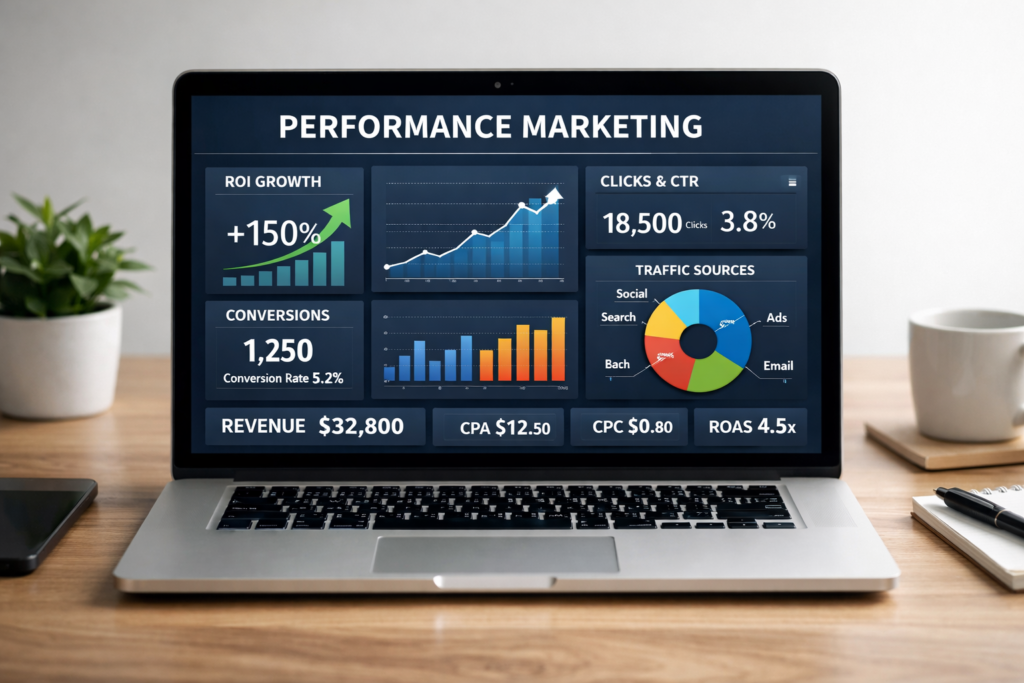
Performance marketing dashboard showing ROI, clicks, and conversion analytics
Marketing

5 Powerful Performance Marketing Strategies to Boost ROI Fast

5 Powerful Performance Marketing Strategies to Boost ROI Fast Introduction: Why Everyone is Talking About Performance Marketing If you’ve ever wished you could pay for ads only when they actually work, then you’re already thinking in the direction of performance marketing. This approach has completely changed how businesses spend money on advertising. Instead of paying upfront for visibility, performance marketing ensures that you only pay when a specific action happens—like a click, lead, or sale. This makes it one of the most efficient and measurable marketing strategies available today. Businesses today want results, not just exposure. That’s exactly why performance marketing has gained so much traction in recent years. It removes uncertainty and replaces it with data-driven decisions. Whether you’re a startup or an established brand, this model helps you control costs while maximizing returns. What is Performance Marketing? At its core, This approach is a digital strategy where advertisers pay only when a measurable outcome is achieved. These outcomes can include clicks, leads, or purchases. Think of it like hiring someone and only paying them when they complete the job successfully. That’s the essence of performance marketing—it’s based entirely on results. Unlike traditional advertising, where success is difficult to measure, performance marketing gives you full visibility into how your campaigns are performing. Every click and conversion is tracked, allowing you to optimize campaigns in real time. “For a deeper understanding, you can refer to guides from HubSpot, which explain how this strategy works in detail.” How Performance Marketing Works Understanding how performance marketing works is key to using it effectively. It follows a simple but powerful cycle: plan, launch, track, and optimize. First, you define your goals. These could be increasing website traffic, generating leads, or boosting sales. Once goals are set, you choose the right channels and launch your campaign. The real strength of performance marketing lies in tracking. Every interaction is measured. If something isn’t working, you adjust it immediately. If something performs well, you invest more into it. This continuous loop of improvement makes performance marketing highly efficient compared to traditional methods. Key Channels in Performance Marketing There are several channels that fall under performance marketing, and each serves a unique purpose. Paid Search Paid search is one of the most popular forms of performance marketing. Ads appear on search engines, and you pay only when someone clicks. This ensures you’re reaching users who are already interested in your offering. Social Media Advertising Social platforms allow precise targeting,  You can reach users based on interests, behavior, and demographics. Display and Native Ads Display ads use visuals to attract attention, while native ads blend into content. Both are essential tools for increasing engagement and conversions. Affiliate Marketing Affiliate marketing is a major part of it. Here, partners promote your products and earn a commission for each successful action. Important KPIs in Performance Marketing Tracking the right metrics is essential in performance marketing. Without data, you’re just guessing. KPI Meaning Importance CPC Cost per click Measures engagement CPA Cost per acquisition Tracks conversions CPL Cost per lead Evaluates leads CPS Cost per sale Measures profitability Cost Per Click (CPC) This shows how much you pay per click. It helps evaluate how attractive your ads are. Cost Per Acquisition (CPA) CPA tells you how much it costs to acquire a customer, a critical metric in performance marketing. Cost Per Lead (CPL) CPL measures how much you pay for each lead generated through your campaigns. Benefits of Performance Marketing The biggest advantage  is efficiency. You’re not wasting money—you’re investing in results. Another major benefit is transparency. you can see exactly what’s working and what’s not. This allows you to make smarter decisions. Flexibility is also a key strength. Campaigns can be adjusted instantly, making  highly adaptable to changes. Challenges in Performance Marketing While this strategy offers many benefits, it also comes with challenges. One of the biggest issues is increasing competition, which can drive up costs. Another challenge is dependency on data. Without proper tracking, even the best  strategy can fail. Practical Tips for Success To succeed in  marketing, you need a clear strategy and consistent optimization. Focus on understanding your audience Continuously test your ads Optimize landing pages for conversions Use retargeting to capture missed opportunities Analyze data regularly These steps can significantly improve your  results. “If you want to learn more, check out our guide on SEO strategies for beginners.” Conclusion It is one of the most powerful strategies in digital advertising today. It allows businesses to pay only for results, making it both cost-effective and measurable. “By focusing on data, continuous optimization, and the right channels, growth marketing can drive significant growth.” FAQs 1. What is results-driven marketing in simple terms? It’s a strategy where you pay only when a specific result, like a click or sale, happens. 2. Is results-driven marketing suitable for small businesses? Yes, because it minimizes risk and ensures better ROI. 3. How is results-driven marketing different from traditional marketing? Traditional marketing focuses on exposure, while results-driven marketing focuses on measurable results. 4. Which platforms are best for results-driven marketing? Search engines and social media platforms are widely used. 5. Can beginners start with results-driven marketing? Absolutely. You can start small and scale as you learn.

Marketing

Content Marketing

Content Marketing: The Ultimate Guide to Building Trust, Traffic, and Sales in 2026          What Is Content Marketing? Simple Definition Let’s cut through the noise. Content marketing is the art of attracting people to your brand by creating useful, engaging, or entertaining content—before you ever try to sell them anything. Instead of shouting “buy now,” you’re quietly building trust, answering questions, and solving problems. Think of it like this: imagine walking into a store where the salesperson immediately pushes a product at you. Annoying, right? Now imagine someone who first helps you understand what you actually need. That’s content marketing in action. In today’s digital world, people research before they buy. They read blogs, watch videos, and scroll through social media. If your brand shows up with helpful content at that moment, you instantly gain an advantage. How It Differs from Traditional Marketing Traditional marketing interrupts. Content marketing invites. Old-school ads push messages into people’s faces—TV commercials, billboards, cold calls. But modern consumers? They’ve learned to ignore them. Content marketing flips the script. Instead of chasing customers, you attract them. Instead of selling first, you help first. That’s why it works so well today. Why Content Marketing Matters in 2026 Changing Consumer Behavior People don’t trust ads like they used to. In fact, most buyers consume multiple pieces of content before making a decision. They Google. They compare. They watch reviews. If your brand isn’t part of that journey, you’re invisible. Content marketing ensures you show up exactly when your audience is searching for answers. Rise of AI and Personalization AI is changing everything—and content marketing is no exception. Today, brands can personalize content based on: User behavior Location Interests Purchase history This means your audience sees content tailored specifically for them, making your message far more effective. Key Benefits of Content Marketing Builds Trust and Authority Trust is currency. When you consistently provide valuable content, people begin to see you as an expert. Over time, that trust turns into loyalty—and eventually, sales. Reduces Customer Acquisition Costs Paid ads stop working the moment you stop paying. Content? It keeps working. A single blog post or video can generate traffic for years. That’s why content marketing has a compounding effect—your results grow over time. Improves SEO and Organic Traffic Search engines love fresh, relevant content. By creating optimized blog posts and videos, you increase your chances of ranking on search engines and attracting free, organic traffic. Types of Content Marketing Blog Content Blogs are the backbone of most content strategies. They help you: Rank on search engines Educate your audience Build authority Video Marketing Video is exploding. Short-form videos, tutorials, and product demos are incredibly engaging and easy to consume. Social Media Content Social platforms help you connect with your audience in real-time. They’re perfect for: Building community Sharing updates Driving traffic Podcasts and Audio Content Podcasts are great for building deep connections. People listen while driving, working, or exercising—making it a powerful way to stay top-of-mind. Email Marketing Email is still king. It’s the only channel you truly own, and it allows you to nurture relationships over time. How Content Marketing Works The Customer Journey Explained Content marketing follows a simple path: Attract attention Build trust Convert into customers Awareness to Conversion Flow Awareness → Blog posts, social media Consideration → Guides, videos Decision → Case studies, demos Each piece of content moves the customer one step closer to buying. Building a Strategy Define Your Target Audience Everything starts here. Ask yourself: Who are they? What problems do they have? What are they searching for? Create Content for Each Funnel Stage Don’t just create random content. Guide your audience step-by-step through their journey. Choose the Right Platforms Not every platform works for every audience. Go where your customers already are. Set Goals and KPIs Track: Traffic Engagement Conversions If you can’t measure it, you can’t improve it.  Tips for Success Consistency Over Perfection Most people fail because they quit too early. Publishing regularly—even imperfect content—is better than waiting forever. Repurpose Content Smartly One blog post can become: Social posts Videos Emails Work smarter, not harder. Use Data to Improve Analyze what works—and double down on it. Real-World  Examples Successful brands don’t just sell—they educate. Blogs that answer real questions Videos that demonstrate products Social posts that spark conversations These brands build audiences first—and customers follow. Common  Mistakes Creating content without a strategy Ignoring SEO Being too promotional Not tracking results Avoid these, and you’re already ahead of most competitors. Future of Content Marketing Content is only getting bigger. With AI tools, anyone can create content—but quality and originality will win. People crave real experiences, authentic voices, and useful insights. The brands that focus on value over volume will dominate. Conclusion Content marketing isn’t just a trend—it’s the backbone of modern marketing. It builds trust.It attracts the right audience.It drives long-term growth. If you focus on helping people first, the sales will follow naturally. Start small. Stay consistent. Keep improving. That’s the real secret. FAQs 1. What is content marketing in simple terms? Content marketing is creating helpful or entertaining content to attract and engage customers instead of directly selling to them. 2. Is content marketing better than paid ads? Both have their place, but content marketing offers long-term benefits and lower costs over time. 3. How long does content marketing take to work? It usually takes a few months to see results, but the impact grows over time. 4. What type of content works best? It depends on your audience, but blogs, videos, and social media content are the most effective. 5. Do small businesses need content marketing? Absolutely. It’s one of the most cost-effective ways to compete with larger brands.

Marketing, Uncategorized

Email Marketing

Email Marketing: The Complete Beginner-to-Pro Guide (2026 Edition) What Is Email Marketing? Simple Definition Let’s keep it real—email marketing is one of the simplest yet most powerful ways to connect with your audience. It’s basically sending emails to people who want to hear from you. That could be to promote products, share updates, or build relationships over time. But here’s the twist: it’s not just about sending emails. It’s about sending the right message to the right person at the right time. Think of it like having a direct conversation with your audience—but at scale. Unlike social media where algorithms decide who sees your content, email gives you full control over your audience. You’re not renting space—you own it. Why Email Marketing Still Matters in 2026 You might wonder—is email marketing still relevant? Absolutely. In fact, it’s stronger than ever. Recent data shows that over 4.48 billion people use email globally, and this number is still growing . That’s more than half the world’s population. Even more interesting? 99% of users check their email daily . Here’s the kicker—email marketing delivers an average ROI of $36–$42 for every $1 spent . That’s insane compared to most marketing channels. So no, email marketing isn’t dead. It’s just evolving—and those who adapt are winning big. Key Email Marketing Statistics You Should Know ROI & Performance Data Let’s talk numbers—because numbers don’t lie. Email marketing consistently outperforms other channels. On average, businesses earn $36 to $40 for every $1 invested . Some industries like retail go even higher, reaching up to $45 ROI per dollar . Now imagine investing ₹100 and getting ₹3600+ back. That’s why marketers love it. Another interesting stat—automated emails generate 41% of total revenue while making up only 2% of email volume . That means smart systems beat mass sending every time. User Behavior Insights Email behavior is just as fascinating. People receive over 80 emails daily on average About 59% of consumers say emails influence their purchases Personalized emails significantly improve engagement and clicks In simple terms, people don’t just read emails—they act on them. Benefits of Email Marketing Direct Communication Think of email as a direct line to your audience. No middleman. No algorithm. Just you and your reader. When someone subscribes, they’re basically saying, “Hey, I’m interested in what you offer.” That’s powerful. You’re not interrupting—you’re invited. This creates a deeper connection. Over time, consistent emails build trust, familiarity, and loyalty. Cost Efficiency Compared to ads or traditional marketing, email is ridiculously affordable. You don’t need a huge budget. Whether you’re sending emails to 100 people or 100,000, the cost difference is minimal. That’s why startups and small businesses love email—it delivers high returns with low investment. Measurable Results One of the best parts? You can track everything. Open rates Click-through rates Conversions This data helps you understand what works and what doesn’t. It’s like having a roadmap for improvement. Challenges of Email Marketing Spam & Deliverability Let’s be honest—not every email lands in the inbox. Spam filters are smarter than ever. If your emails look suspicious or irrelevant, they might never reach your audience. That’s why list quality, content relevance, and proper setup matter more than ever. Competition in Inbox Here’s the reality: inboxes are crowded. Your audience is getting dozens of emails daily. Standing out requires creativity, relevance, and timing. Generic emails? Ignored. Personalized emails? Opened. Types of Email Marketing Campaigns Promotional Emails These are your classic marketing emails—discounts, offers, product launches. They’re great for driving sales and traffic. Transactional Emails These include order confirmations, receipts, or shipping updates. They might seem boring—but they actually have very high open rates because users expect them. Newsletter Campaigns Newsletters keep your audience engaged with updates, tips, or content. Think of them as relationship builders rather than sales tools. How Email Marketing Works (Step-by-Step) Building a List First rule: never buy email lists. Instead, grow your list organically using: Lead magnets (free guides, discounts) Signup forms Valuable content Quality beats quantity every time. Creating Campaigns Your email should have: A strong subject line Clear message Engaging content A compelling CTA Keep it simple. People scan emails—they don’t read novels. Automation & Segmentation This is where magic happens. Automation allows you to send emails based on user actions—like signing up or making a purchase. Segmentation lets you target specific groups, making your emails more relevant and effective. Best Practices for Email Marketing Subject Lines Your subject line decides everything. Make it: Short Clear Curiosity-driven Personalized Design & CTA Keep your design clean and mobile-friendly. Use clear CTAs like: “Shop Now” “Get Started” “Learn More” Timing & Testing Timing matters. Test different days, times, and formats. Use A/B testing to improve performance continuously. Email Marketing Tools & Platforms Popular tools include: Mailchimp HubSpot Moosend Brevo These platforms help with automation, analytics, and campaign management. Future of Email Marketing AI & Personalization Trends Email marketing is evolving fast. AI is now helping marketers: Personalize content Predict user behavior Optimize send times In fact, 64% of marketers are already using AI for personalization . The future? More human-like emails powered by smarter technology. Conclusion Email marketing isn’t just another digital tactic—it’s a relationship-building powerhouse. While trends come and go, email remains one of the few channels where you truly own your audience. When done right, it feels less like marketing and more like a conversation. And that’s exactly why it works. If you focus on value, personalization, and consistency, email marketing can become one of your strongest growth engines. FAQs 1. Is email marketing still effective in 2026? Yes, it remains one of the highest ROI marketing channels, delivering up to $36–$42 per dollar spent. 2. How often should I send marketing emails? It depends on your audience, but consistency matters more than frequency—start with 1–2 emails per week. 3. What is a good email open rate? Average open rates range between 20%–40%, depending on industry and personalization. 4. Can small businesses benefit from email marketing? Absolutely. It’s cost-effective and

Scroll to Top