
Content Marketing: The Ultimate Guide to Building Trust, Traffic, and Sales in 2026
What Is Content Marketing?
Simple Definition
Let’s cut through the noise.
Content marketing is the art of attracting people to your brand by creating useful, engaging, or entertaining content—before you ever try to sell them anything. Instead of shouting “buy now,” you’re quietly building trust, answering questions, and solving problems.
Think of it like this: imagine walking into a store where the salesperson immediately pushes a product at you. Annoying, right? Now imagine someone who first helps you understand what you actually need. That’s content marketing in action.
In today’s digital world, people research before they buy. They read blogs, watch videos, and scroll through social media. If your brand shows up with helpful content at that moment, you instantly gain an advantage.
How It Differs from Traditional Marketing
Traditional marketing interrupts. Content marketing invites.
Old-school ads push messages into people’s faces—TV commercials, billboards, cold calls. But modern consumers? They’ve learned to ignore them.
Content marketing flips the script. Instead of chasing customers, you attract them. Instead of selling first, you help first.
That’s why it works so well today.
Why Content Marketing Matters in 2026
Changing Consumer Behavior
People don’t trust ads like they used to. In fact, most buyers consume multiple pieces of content before making a decision.
They Google. They compare. They watch reviews.
If your brand isn’t part of that journey, you’re invisible.
Content marketing ensures you show up exactly when your audience is searching for answers.
Rise of AI and Personalization
AI is changing everything—and content marketing is no exception.
Today, brands can personalize content based on:
- User behavior
- Location
- Interests
- Purchase history
This means your audience sees content tailored specifically for them, making your message far more effective.
Key Benefits of Content Marketing
Builds Trust and Authority
Trust is currency.
When you consistently provide valuable content, people begin to see you as an expert. Over time, that trust turns into loyalty—and eventually, sales.
Reduces Customer Acquisition Costs
Paid ads stop working the moment you stop paying.
Content? It keeps working.
A single blog post or video can generate traffic for years. That’s why content marketing has a compounding effect—your results grow over time.
Improves SEO and Organic Traffic
Search engines love fresh, relevant content.
By creating optimized blog posts and videos, you increase your chances of ranking on search engines and attracting free, organic traffic.
Types of Content Marketing
Blog Content
Blogs are the backbone of most content strategies.
They help you:
- Rank on search engines
- Educate your audience
- Build authority
Video Marketing
Video is exploding.
Short-form videos, tutorials, and product demos are incredibly engaging and easy to consume.
Social Media Content
Social platforms help you connect with your audience in real-time.
They’re perfect for:
- Building community
- Sharing updates
- Driving traffic


Podcasts and Audio Content
Podcasts are great for building deep connections.
People listen while driving, working, or exercising—making it a powerful way to stay top-of-mind.
Email Marketing
Email is still king.
It’s the only channel you truly own, and it allows you to nurture relationships over time.

How Content Marketing Works
The Customer Journey Explained
Content marketing follows a simple path:
- Attract attention
- Build trust
- Convert into customers
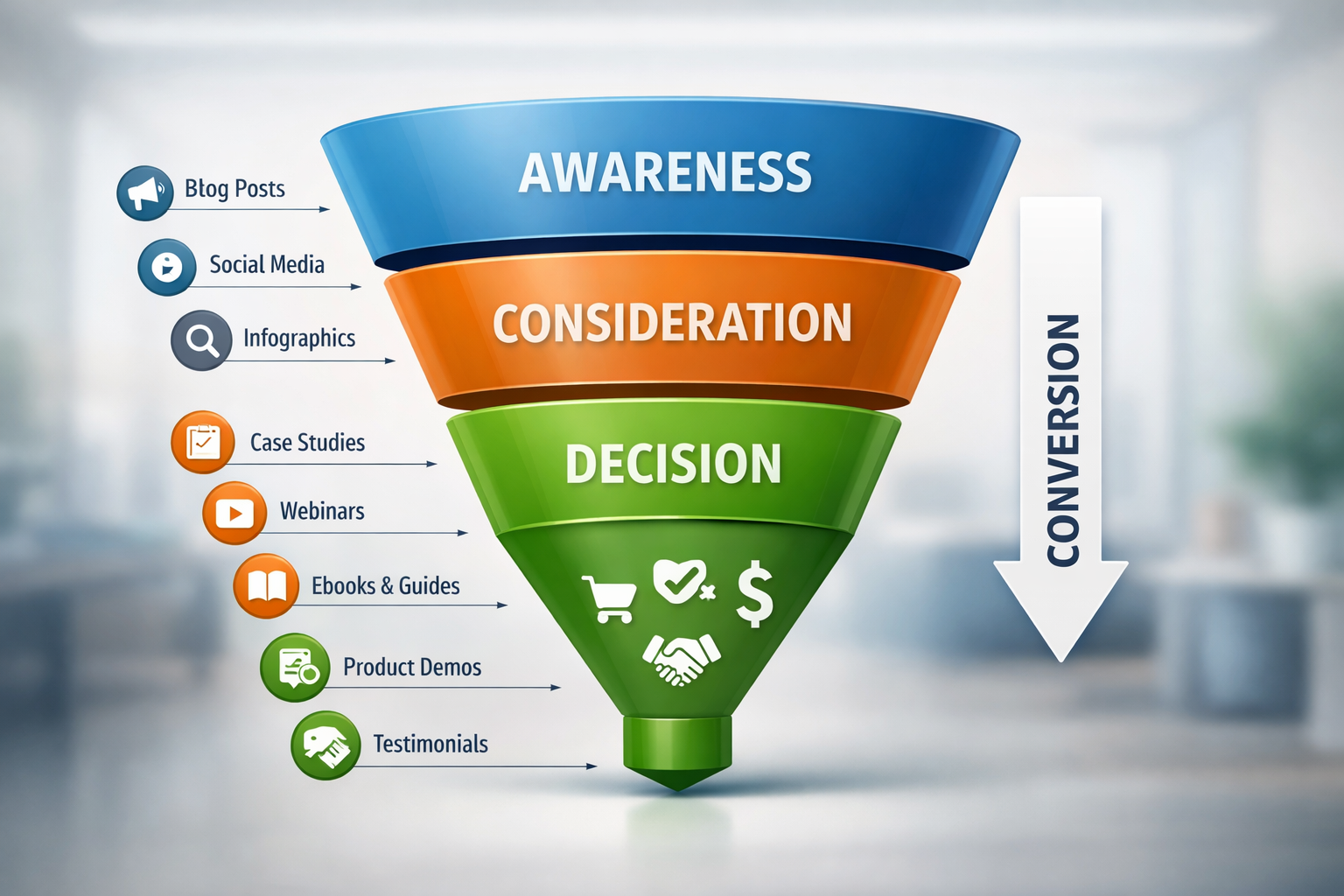
Awareness to Conversion Flow
- Awareness → Blog posts, social media
- Consideration → Guides, videos
- Decision → Case studies, demos
Each piece of content moves the customer one step closer to buying.
Building a Strategy
Define Your Target Audience
Everything starts here.
Ask yourself:
- Who are they?
- What problems do they have?
- What are they searching for?
Create Content for Each Funnel Stage
Don’t just create random content.
Guide your audience step-by-step through their journey.
Choose the Right Platforms
Not every platform works for every audience.
Go where your customers already are.
Set Goals and KPIs
Track:
- Traffic
- Engagement
- Conversions
If you can’t measure it, you can’t improve it.
Tips for Success
Consistency Over Perfection
Most people fail because they quit too early.
Publishing regularly—even imperfect content—is better than waiting forever.
Repurpose Content Smartly
One blog post can become:
- Social posts
- Videos
- Emails
Work smarter, not harder.
Use Data to Improve
Analyze what works—and double down on it.
Real-World Examples
Successful brands don’t just sell—they educate.
- Blogs that answer real questions
- Videos that demonstrate products
- Social posts that spark conversations
These brands build audiences first—and customers follow.
Common Mistakes
- Creating content without a strategy
- Ignoring SEO
- Being too promotional
- Not tracking results
Avoid these, and you’re already ahead of most competitors.
Future of Content Marketing
Content is only getting bigger.
With AI tools, anyone can create content—but quality and originality will win.
People crave real experiences, authentic voices, and useful insights.
The brands that focus on value over volume will dominate.
Conclusion
Content marketing isn’t just a trend—it’s the backbone of modern marketing.
It builds trust.
It attracts the right audience.
It drives long-term growth.
If you focus on helping people first, the sales will follow naturally.
Start small. Stay consistent. Keep improving.
That’s the real secret.
FAQs
1. What is content marketing in simple terms?
Content marketing is creating helpful or entertaining content to attract and engage customers instead of directly selling to them.
2. Is content marketing better than paid ads?
Both have their place, but content marketing offers long-term benefits and lower costs over time.
3. How long does content marketing take to work?
It usually takes a few months to see results, but the impact grows over time.
4. What type of content works best?
It depends on your audience, but blogs, videos, and social media content are the most effective.
5. Do small businesses need content marketing?
Absolutely. It’s one of the most cost-effective ways to compete with larger brands.